
A Japanese auction sheet is a vehicle inspection report used at Japanese car auctions. It records the overall grade, mileage, interior condition, body defects and inspector comments.
For buyers considering a Japanese recond car in Malaysia, this report helps assess the vehicle beyond its photos. Check five key areas: the overall grade, interior and exterior ratings, damage diagram, inspector comments and vehicle details.
Grading standards and symbols can differ between auction houses. Read the complete report using the relevant auction house rules.
What Do Auction Grades Mean?
| Grade | General meaning |
|---|---|
| S | Almost-new condition; subject to age, mileage and inspection criteria. |
| 6 | Near-new, with very little wear or reconditioning needed. |
| 5 | Excellent used condition; small, inconspicuous imperfections. |
| 4.5 | Very good condition; light wear or minor defects. |
| 4 | Good used condition; visible wear or repairs may be needed. |
| 3.5 | Noticeable wear; several areas may need bodywork or interior repairs. |
| 3 | Substantial deterioration; extensive refurbishment may be needed. |
| 2 | Poor condition; significant rust, corrosion or serious defects possible. |
| R / RA | Repair-history category; read the definitions and comments. |
| 0 / * / blank | Requires clarification; these markings have no universal meaning. |
Understanding the Ratings
Grade S vs Grade 6
Both are higher grades, but their criteria differ. S generally applies to more recently registered vehicles with very low mileage and almost no wear. Grade 6 usually permits a greater age or mileage while still requiring exceptional condition. Neither automatically means a brand-new, unregistered car.
R, RA and Special Markings
R and RA generally identify repair-history categories. Some auctions use RA for less extensive repair history, but the letters alone do not explain the extent or quality of repairs. A zero, asterisk or blank must also be interpreted using its field and auction rules.
How to Compare the Examples
The following seven Toyota Alphard reports show different grades in practice. Compare the overall grade, cabin and exterior ratings, damage map and written notes. Cars with the same grade may still have different defects and repair needs.
Grade 6 Auction Sheet Example
 Click to enlarge
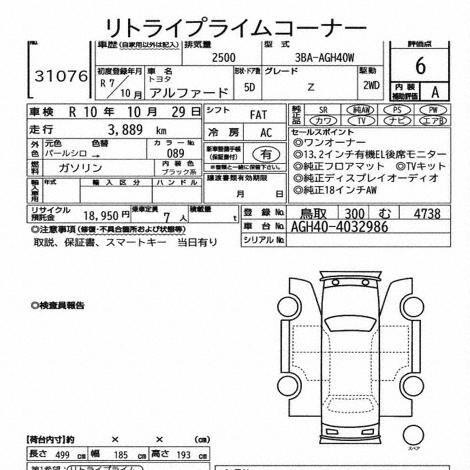
Overall Grade 6, interior A and recorded mileage of 3,889 km. No damage codes are visible on the body diagram. Read the inspector comments for additional details.
Grade 5 Auction Sheet Example
 Click to enlarge
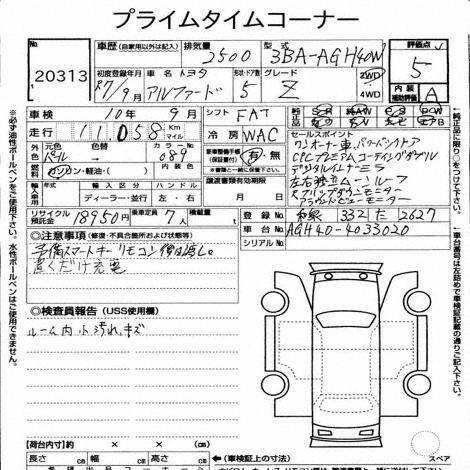
Overall Grade 5 with interior A. No damage codes are visible on the body map, but the inspector still records observations. A clean diagram does not replace reading the notes.
Grade 4.5 Auction Sheet Example
 Click to enlarge
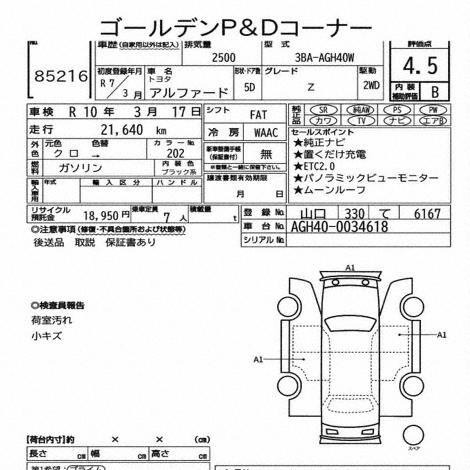
Overall Grade 4.5 with interior B. Several A1 markings generally identify small scratches. Their positions help locate the recorded imperfections.
Grade 4 Auction Sheet Example
 Click to enlarge
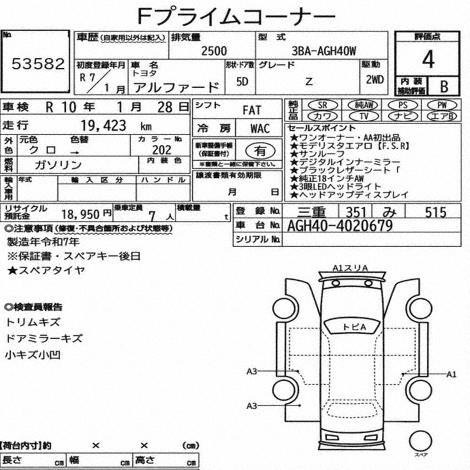
Overall Grade 4 with interior B. The diagram includes A1 and A3 scratches and other records. Some scratch markings are more substantial than in the previous example.
Grade 3.5 Auction Sheet Example
 Click to enlarge
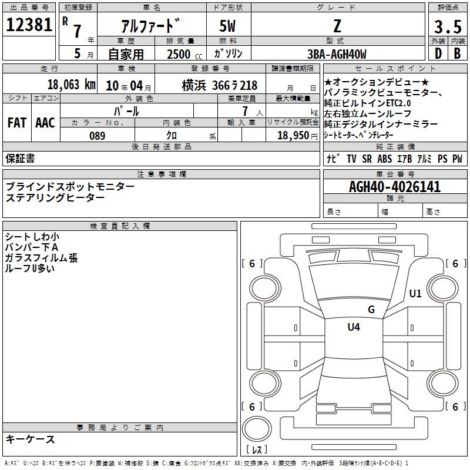
Overall Grade 3.5, exterior D and interior B. The map includes U1 and U4 dents. Different cabin and exterior ratings show why each section should be assessed separately.
Grade R Auction Sheet Example
 Click to enlarge
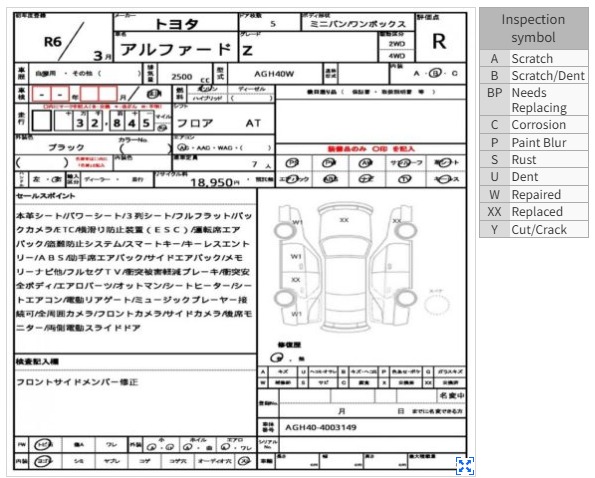
Overall Grade R identifies a repair-history category; XX marks replaced panels. Read the notes for repair details. The supplied side legend incorrectly labels BP as replacement required: BP commonly refers to bodywork or repair traces; X commonly means replacement required.
Ungraded / Accident-As-Is Example
 Click to enlarge
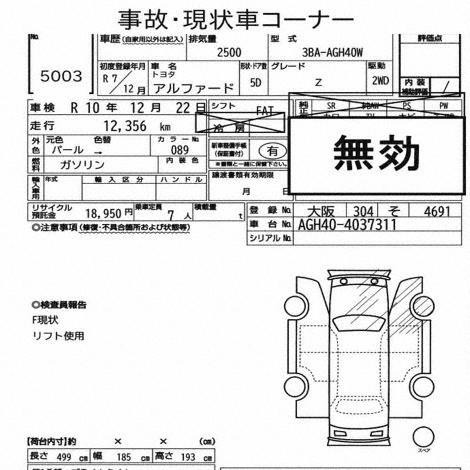
No numerical overall grade is displayed. The heading identifies an Accident / As-Is Vehicle Section; the large stamp means Invalid. Clarify the report status and vehicle condition. None is not an official grade here.
Interior Ratings & Body Codes
Interior and Exterior Grades
These ratings assess the cabin and body separately. Some sheets show both; others only an interior rating. Where an A-E exterior scale is used, A generally represents the best condition, with later letters indicating increasing wear or damage. Check the map and auction rules.
| Interior | General meaning |
|---|---|
| A | Excellent; little or no noticeable wear. |
| B | Well-maintained; light signs of use. |
| C | Noticeable wear; stains or small burns possible. |
| D | Heavy wear; tears, dirt, burns or odours possible. |
| E | Extensive deterioration; major cleaning or repairs needed. |
Reading the Damage Diagram
The letter identifies the defect; its number generally indicates size or severity. Higher numbers usually mean more substantial defects, but scales vary.
| Code | Meaning |
|---|---|
| A | Scratch |
| U | Dent |
| W | Repair traces, unevenness or waviness |
| Y | Crack, split or tear |
| S | Rust |
| C | Corrosion |
| X | Replacement required |
| XX | Already replaced |
Code Examples & Equipment
What Does A1 Mean?
A1 generally indicates a small scratch. A3 usually identifies a more substantial scratch. The Grade 4.5 example includes several A1 marks.
What Does U Mean?
U identifies a dent; its number indicates degree under the auction rules. U4 in the Grade 3.5 example shows that some scales extend beyond 3.
X vs XX
X means replacement is required. XX means replacement has already been carried out. Read the grade and inspector comments for context.
Common Equipment Codes
| Code | Meaning |
|---|---|
| AC | Air conditioning |
| AW | Alloy wheels |
| SR | Sunroof |
| TV | Television |
| NAVI / ナビ | Navigation system |
| PS | Power steering |
| PW | Power windows |
| AB / エアB | Airbags |
| カワ / 革 | Leather seats or upholstery |
Frequently Asked Questions
What Does Grade 5A or 6A Mean?
Dealers commonly use 5A for overall Grade 5 with interior A, and 6A for overall Grade 6 with interior A. Confirm the fields on the original report.
Does a Higher Grade Mean No Defects?
No. A higher grade generally indicates better assessed condition, but minor defects may still be recorded. Read the notes even when the diagram looks clean.
Does XX Automatically Mean Grade R?
No. XX marks a replaced panel; R is an overall repair-history classification. The panel, repair nature and auction rules determine classification.
Can I Choose a Car by Its Grade Alone?
Use the grade as a starting point. Also check mileage, interior and exterior ratings, the damage map and translated inspector comments.
Related Questions
References
- USS inspection criteria: uss-engine.com/info_items/rules/inspection_20121001.pdf
- BE FORWARD Auction Sheet Guide: cdn.beforward.jp/assets/resource/pdf/beforward_live_auction/auction-sheet-guide.pdf
- AAA Japan grading guide: aaajapan.com/information/auction-grade
Report images supplied by the user. General definitions are a guide; the relevant auction rules and original comments take priority.